
White Plate vs Yellow Plate: Why Your Company Should Only Hire Commercial Cabs
A local operator quotes noticeably less than everyone else. The cars look new. Then someone in admin notices the plates are white. It happens more often than companies admit, and the saving disappears the first time one of those cars is stopped, or crashes with your staff inside. This guide covers the law, the insurance gap and a one-minute check anyone on your team can run.
Last reviewed 28 October 2026
The short answer
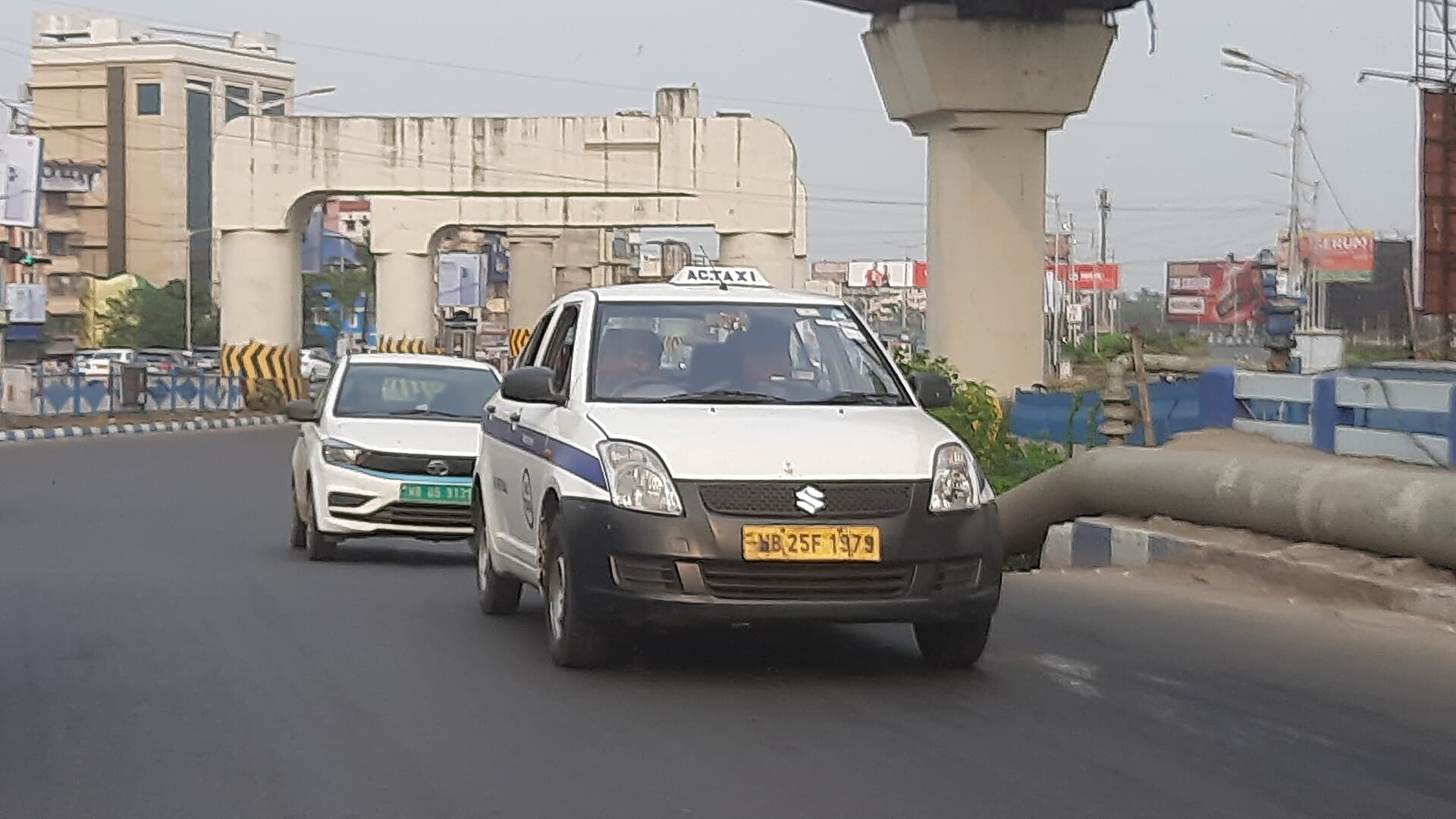
When your company pays for a car and driver to carry employees or guests, the car is being used for hire or reward. That makes it a transport vehicle under the Motor Vehicles Act, 1988. It needs a commercial registration, which you see as a yellow plate (green for electric), and a permit. A private white plate car does not qualify, however new or clean it is.
What the plate colours mean
| Plate | Used for | OK for chauffeur-driven company work? |
|---|---|---|
| White with black letters | Private, non-transport vehicles | No |
| Yellow with black letters | Commercial (transport) vehicles such as taxis and cabs | Yes, with a valid permit |
| Green with yellow letters | Electric transport vehicles | Yes, with a valid permit or authorisation |
| Black with yellow letters | Self-drive rental cars under the Rent-a-Cab scheme | No, the customer drives these |
What the Motor Vehicles Act says
Four sections do most of the work.
- Section 2(35) defines a public service vehicle as any motor vehicle used or adapted to carry passengers for hire or reward. Motor cabs and contract carriages fall in it.
- Section 2(7) defines a contract carriage: a vehicle hired as a whole under a contract, at a fixed or agreed rate, on a time or distance basis. A monthly staff cab, or a car booked for a two-day conference, fits this description.
- Section 66 says no owner may use a transport vehicle in a public place, or let anyone else use it, without a permit.
- Section 192A punishes use without a permit. A first offence can bring up to six months' imprisonment and a fine. Repeat offences carry more.
The vehicle can be detained too. Transport departments in Karnataka and Kerala have run drives against private cars used for hire. If one of those drives catches a car carrying your team to a client meeting, the meeting is the smallest thing you lose.
Where the insurance gap lands
Every private car policy has a "limitations as to use" clause. It covers social, domestic and personal business use. It does not cover use for hire or reward, and people carried for hire are left out of occupant cover.
Follow an accident through:
- The insurer can reject the owner's own-damage claim.
- Third-party victims are still paid, but the insurer may pay them and then recover the money from the owner.
- Your employee in the back seat was a passenger carried for hire, outside the occupant cover.
Section 147 of the Act requires transport vehicles to carry passenger liability cover. Commercial taxi policies include it. Private policies do not.
Why this becomes your company's problem
How to check a cab in about a minute
Your admin or security team can do this at the gate on the first day, and then at random. No special access is needed.
- Plate colour. Yellow with black letters, or green with yellow letters for an electric transport vehicle. White means stop here.
- VAHAN record. Search the registration number on Parivahan's VAHAN services. Check the record matches the make and model in front of you and shows a transport (commercial) vehicle class.
- Permit. Ask to see it. Local staff routes need a state taxi or contract carriage permit; interstate trips need a permit that covers them, such as an All India Tourist Permit.
- Fitness and insurance. The fitness certificate should be current. Transport vehicles renew it every 2 years up to 8 years of age, then every year. The insurance policy should be a commercial one.
- GPS and emergency button. Public service vehicles need an AIS-140 tracking device with an emergency button under CMVR Rule 125H. You should be able to see the button.
- Driver. Check the licence on Parivahan Sarathi. If your policy asks for a badge or police verification, ask for those too.
If a vendor objects to any of this, you have learned something useful before signing. The full list of what to ask is in our employee transport vendor checklist.
Put it in the contract
Checking at the gate catches problems. A contract clause stops them from coming back next month, when the vendor quietly swaps in a different car. Ask for these terms:
- Only commercially registered vehicles with valid permits will be used for your work, including replacement and backup cars.
- The vendor shares the registration numbers of every vehicle on your account, and tells you before any change.
- A monthly sheet with the expiry dates of each vehicle's insurance, fitness, permit and PUC.
- Your right to inspect any vehicle and refuse one that does not meet these terms, without being billed for it.
- The vendor carries the consequences of a lapsed permit or policy, not your company.
"The car is under conversion"
You may hear this from a vendor short of cars. Converting a private car to commercial is a real process, done through VAHAN or the RTO: the owner pays the difference in motor vehicle tax and fees, the car is inspected and fitness tested, the RC is endorsed as a transport vehicle, new yellow plates go on, the insurance moves to a commercial policy, and a permit is issued. Where required, an AIS-140 device is fitted and registered too. Until the last of those steps is done, the car is still private. It should not carry your staff while the paperwork is "in process".
Green plates and electric cabs
Electric transport vehicles carry green plates with yellow letters. A private electric car is also green, but with white letters, so read the letter colour as well as the plate colour. The same rules apply: commercial registration, a permit, commercial insurance, fitness and GPS.
Electric cabs pay no All India Tourist Permit fee, and their running cost per km is low, which suits long staff routes. In Delhi, the Motor Vehicle Aggregator and Delivery Service Provider Scheme, 2023 requires covered fleets to move new four-wheelers to electric in phases, reaching 100% by April 2030. If your company reports on emissions, ask your vendor which routes could run on EVs. We supply EVs on request.
Frequently asked questions
Is it illegal for a company to hire a private white plate car with a driver?
A car carrying passengers for hire or reward is a transport vehicle under the Motor Vehicles Act, 1988, and Section 66 says it cannot be used without a permit. Section 192A punishes running a vehicle without a permit, and the car can be detained mid-trip and your staff are the ones on board. A company has no good reason to take that risk.
What happens if a white plate car on a company booking has an accident?
Private car policies exclude use for hire or reward. The insurer can reject the own-damage claim, and while third-party victims still get paid, the insurer may pay them and then recover the money from the owner. Passengers carried for hire are also left out of occupant cover, which is the cover your injured employee would be looking to.
How can our admin team check if a cab is commercial?
Look at the plate first: yellow with black letters, or green with yellow letters for an electric cab. Then search the registration number on Parivahan's VAHAN services and check the record matches the car and shows a transport class. Ask the driver for the permit, the fitness certificate and the insurance policy, which should be a commercial one.
Are black plate cars allowed for company duty?
Black plates with yellow letters are for self-drive rental cars under the Rent-a-Cab scheme, where the customer drives. They are not meant for chauffeur-driven staff or guest transport.
Does the cab driver need a badge?
The Supreme Court held in 2017, and a Constitution Bench confirmed in 2024, that an LMV licence holder can drive a transport vehicle under 7,500 kg without a separate transport endorsement. Some states, permit conditions and company policies still ask for a badge, so decide what your own policy requires and put it in the vendor contract.
Hire cabs with the right plates and papers
Every Corporate Car Rent cab is commercially registered, with a permit, commercial insurance, fitness, PUC and AIS-140 GPS. Ask us for the documents before the first trip.
Sources
Rules and figures on this page come from these official notifications, laws and reports. Check the current position for your own case.
- Motor Vehicles Act, 1988 (India Code)
- Section 192A, Motor Vehicles Act: using vehicle without permit
- Section 147, Motor Vehicles Act: insurance requirements (passenger liability)
- SBI General: Private car package policy wording (limitations as to use)
- All India Tourist Vehicles (Permit) Rules, 2023 (G.S.R. 302(E))
- MoRTH G.S.R. 272(E), 5 April 2022: fitness of transport vehicles
- CMVR Rule 125H: VLTD and emergency button (Tripura Transport notification with MoRTH references)
- Parivahan: VAHAN online services
- Royal Sundaram: How to convert a private vehicle to commercial
- Parivahan Sarathi: driving licence services
- Bar & Bench: Supreme Court Constitution Bench on LMV licence and transport vehicles (2024)
- Cartoq: Bengaluru RTO cracks down on private vehicles used for car sharing
- Inc42: Delhi aggregator scheme EV transition by 2030